Garlic
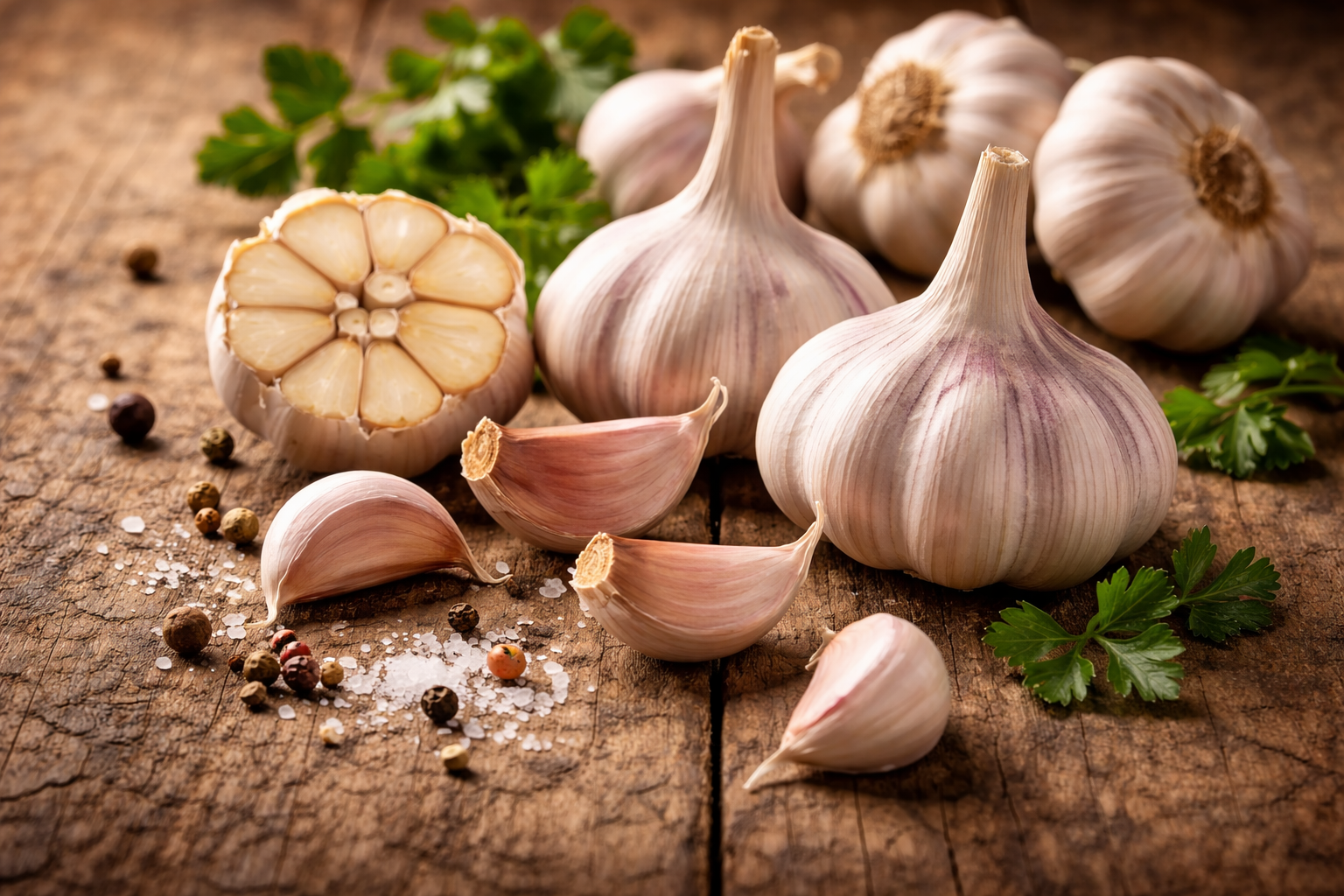
Garlic (Allium sativum)
Garlic is one of the most widely recognized plants in both traditional herbal systems and global food culture. Known for its strong aroma and distinctive bulb structure, garlic has been used for centuries across many regions of the world.
As both a culinary ingredient and a traditional botanical, garlic has maintained a unique position in human history. Its long-standing presence in kitchens and herbal traditions has made it one of the most familiar and widely studied plants in natural wellness discussions.
The Garlic Plant
Garlic comes from the plant Allium sativum, a member of the Allium family, which also includes onions, leeks, and chives. It grows from a bulb composed of multiple cloves, each enclosed in a thin, papery skin.
The plant produces long, narrow green leaves that grow upright from the bulb. In certain conditions, garlic may also produce a flowering stalk known as a scape, which curls as it develops.
Its simple but highly recognizable structure has made garlic one of the easiest cultivated plants to identify.
Plant Identification
Garlic is typically identified by its underground bulb made up of individual cloves arranged in a circular pattern. Each clove is covered by a thin outer skin and contributes to the overall bulb structure.
Above ground, the plant produces flat or slightly rounded green leaves that resemble other members of the Allium family. When crushed or cut, garlic releases a strong, unmistakable aroma that further distinguishes it.
The combination of bulb formation, leaf shape, and scent makes garlic highly recognizable among cultivated plants.
Native Habitat and Growing Regions
Garlic is believed to have originated in Central Asia but has been cultivated and spread across the world for thousands of years. It is now grown in many regions with suitable soil and climate conditions.
The plant prefers well-drained soil and moderate sunlight and is commonly grown in home gardens, farms, and agricultural systems. Because of its adaptability and usefulness, garlic has become a staple crop in many cultures.
Its widespread cultivation has contributed to its global recognition and long-standing importance.
Traditional Uses
Garlic has a long history of use in traditional herbal systems, including those of ancient Egypt, Greece, China, and other regions. It has often been included in preparations associated with general wellness, seasonal support, and traditional dietary practices.
In addition to herbal traditions, garlic has been used extensively in cooking, where it adds flavor and depth to a wide variety of dishes. This combination of culinary and traditional use has helped maintain garlic’s relevance across generations.
These traditional applications highlight garlic’s role as both a functional food and a respected plant in herbal history.
Natural Plant Compounds
Garlic contains a range of naturally occurring compounds, including sulfur-containing constituents such as allicin, which is formed when garlic is crushed or chopped. These compounds contribute to garlic’s characteristic aroma and chemical profile.
Researchers have studied garlic for its complex mixture of plant compounds, including antioxidants and other phytochemicals commonly found in Allium species. This has led to ongoing interest in garlic within modern botanical and nutritional discussions.
Its rich chemical composition continues to connect traditional use with contemporary scientific curiosity.
Traditional Preparations
Garlic has been prepared in many ways across different traditions. It may be used fresh, dried, cooked, or infused into oils and mixtures depending on the context.
In culinary use, garlic is often chopped, crushed, or roasted to bring out its flavor. In traditional herbal practices, it has been included in teas, broths, and other preparations.
These preparation methods reflect garlic’s versatility and its ability to fit into both everyday meals and broader plant traditions.
Garlic in Food Culture
Garlic plays a central role in global cuisine and is used in countless traditional dishes. Its strong flavor allows it to enhance other ingredients while also standing out as a defining component in many recipes.
Across cultures, garlic has been valued not only for taste but also for its historical association with nourishment and traditional dietary practices.
This deep connection to food culture has helped garlic remain one of the most widely used plants in the world.
Garlic and Wellness Awareness
In modern wellness discussions, garlic is often recognized as a foundational plant with a long history of traditional use. It is frequently included in conversations about whole foods, traditional diets, and plant-based approaches to daily living.
While no single plant should be viewed as a complete solution to complex health concerns, garlic continues to be appreciated as part of a broader approach to understanding food and plant traditions.
Its continued use across cultures reflects its enduring importance and versatility.
Safety Notes
As with all plants used in traditional or culinary contexts, garlic should be used appropriately and with awareness. Different preparations may vary, and individuals may respond differently to strong plants.
Learning about proper use, preparation, and sourcing can help support a more informed and responsible approach to plant knowledge.
Learning About Medicinal Plants
Garlic offers an excellent example of how a single plant can bridge the gap between food and traditional herbal knowledge. Its presence in both everyday cooking and long-standing plant traditions highlights the importance of understanding plants in a broader context.
Studying garlic alongside other herbs, roots, and flowers can help build a deeper appreciation for botanical education and the role of plants in human history.
For many people, garlic serves as a starting point for exploring the connection between diet, tradition, and natural plant knowledge.