Ginger
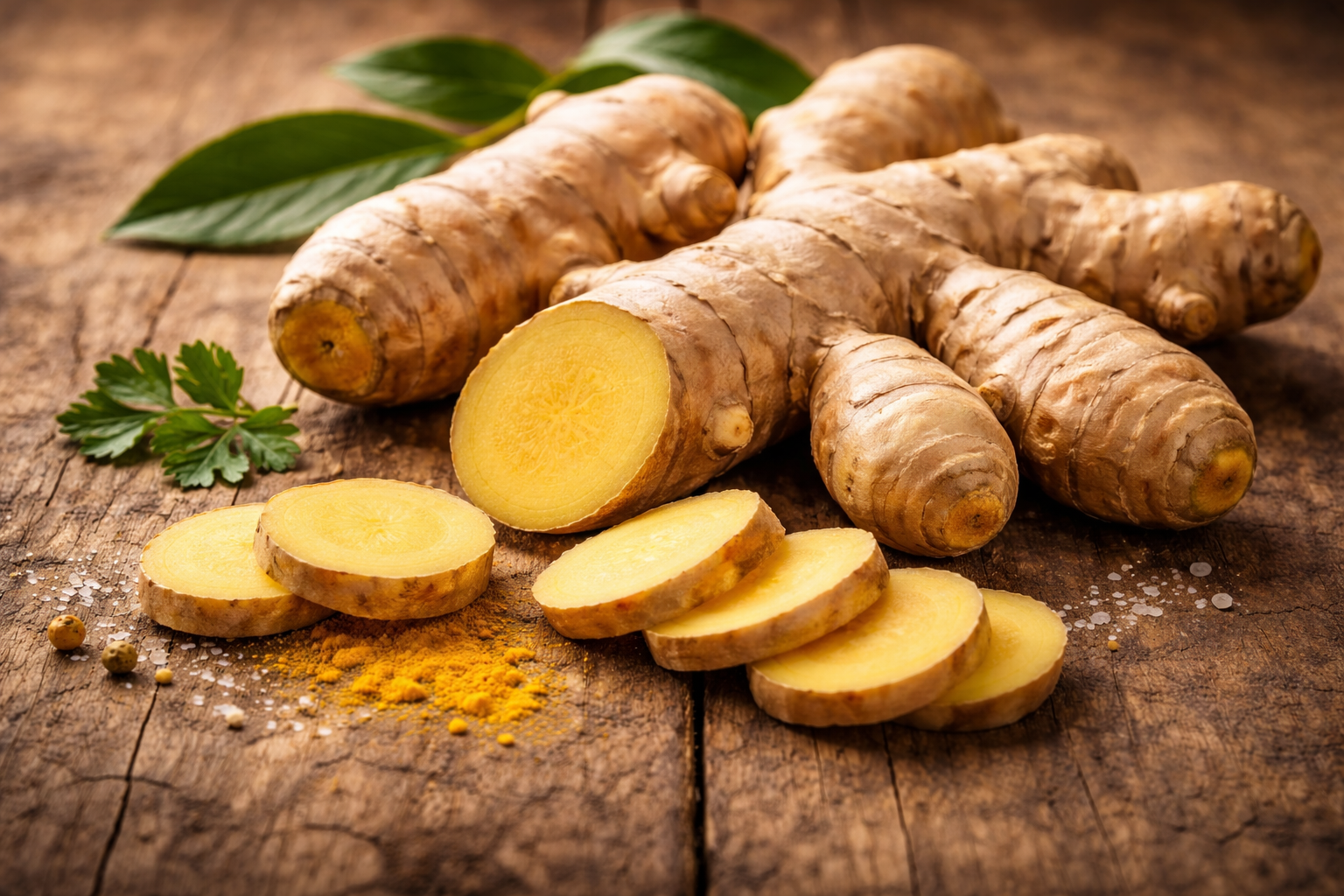
Ginger (Zingiber officinale)
Ginger is one of the most widely used herbal roots in both culinary traditions and traditional wellness practices. Known for its warm, spicy flavor and distinctive aroma, ginger has been valued for thousands of years across many cultures. Today it remains a common ingredient in kitchens, herbal teas, and traditional plant preparations.
The ginger plant is native to Southeast Asia and produces an underground rhizome, commonly referred to as ginger root. This rhizome is the part of the plant most often used in cooking and herbal traditions. Over time, ginger has become one of the most recognizable and widely distributed herbal plants in the world.
The Ginger Plant
Ginger comes from the plant Zingiber officinale, a tropical species that grows in warm climates and produces thick underground rhizomes. These rhizomes develop the strong flavor and aromatic oils that give ginger its recognizable taste.
Fresh ginger root is commonly used in cooking, teas, and herbal preparations. The rhizome may also be dried and ground into ginger powder, which is widely used as a spice in baking, beverages, and seasoning blends.
Because of its strong aroma and flavor, ginger has become a staple ingredient in cuisines around the world.
Plant Identification
The ginger plant grows as a leafy tropical herb that can reach heights of about two to four feet. It produces long, narrow green leaves that grow upward from thick underground rhizomes. The rhizome itself is knobby and light brown on the outside, with a pale yellow interior that carries the plant's characteristic aroma.
Ginger plants may also produce cone-shaped flower spikes that range in color from pale yellow to purple depending on the variety. While these flowers are visually distinctive, the underground rhizome remains the most valued part of the plant.
Native Habitat and Growing Regions
Ginger is believed to have originated in Southeast Asia, where warm temperatures, rich soil, and abundant rainfall provide ideal growing conditions. Over time, the plant spread throughout tropical and subtropical regions including India, China, Indonesia, and parts of Africa.
Today ginger is cultivated in many regions around the world where the climate remains warm and humid. Countries such as India, China, Nigeria, and Thailand are among the largest producers of ginger root used in culinary and herbal products.
Traditional Uses
Across many cultures, ginger has been used as part of traditional wellness systems. Historical records from regions such as China, India, and the Middle East describe ginger as a plant valued for its warming qualities and its role in traditional herbal practices.
In many traditional systems, ginger has been incorporated into teas, tonics, and culinary preparations. These uses developed through centuries of observation and experience with the plant in everyday life.
Today, ginger remains widely used both as a culinary spice and as a common ingredient in herbal beverages and traditional preparations.
Traditional Preparations
Throughout history ginger has been prepared in many different forms depending on the region and cultural tradition. Fresh ginger root may be sliced or grated into hot water to create herbal teas, while dried ginger powder is often used in spice blends, baked goods, and warming beverages.
In some traditional practices, ginger has also been combined with other herbs and spices to create tonics or broths used in daily meals. These preparations reflect how culinary and herbal traditions often overlap in many cultures.
Natural Plant Compounds
Ginger contains a variety of natural plant compounds that contribute to its flavor and aroma. Among the most well-known are compounds such as gingerol and related plant constituents that give ginger its characteristic spicy taste.
These compounds have attracted interest from researchers studying plant chemistry and the biological activity of botanical compounds. Ginger also contains aromatic oils and naturally occurring antioxidants that contribute to the plant's overall profile.
Because of these compounds, ginger continues to be studied as part of broader research into plant-based ingredients and traditional herbal knowledge.
Ginger in Culinary Traditions
Ginger has become a key ingredient in many global cuisines. It is commonly used in soups, stir-fries, sauces, teas, baked goods, and spice blends. Fresh ginger root is often grated or sliced into dishes, while powdered ginger appears in baked foods and traditional recipes.
The root pairs well with other spices such as garlic, turmeric, cinnamon, and black pepper. These combinations appear frequently in cultural recipes that integrate herbs and spices into everyday cooking.
Through these culinary uses, ginger has become one of the most accessible herbs in modern kitchens.
Ginger and Wellness Awareness
In recent years, ginger has gained renewed attention within modern wellness conversations. Many individuals explore ginger as part of broader lifestyle practices that emphasize balanced nutrition, natural ingredients, and traditional plant knowledge.
While ginger is widely used in food and herbal beverages, it is generally viewed as one component of a larger lifestyle approach that includes healthy eating patterns, movement, hydration, and recovery practices.
Understanding ginger within the context of both culinary traditions and historical herbal knowledge can help provide a balanced perspective on this well-known plant.
Safety Notes
Ginger is widely used as a culinary spice and is commonly consumed in foods and beverages around the world. As with many herbs, individuals who are pregnant, taking medications, or managing medical conditions should consult a qualified healthcare professional before significantly increasing herbal intake.
Learning about herbs responsibly includes understanding both traditional uses and modern guidance regarding safe consumption.
Learning About Herbal Plants
Plants like ginger offer a starting point for individuals exploring herbal traditions and botanical education. Many herbs with long histories of cultural use continue to attract interest from researchers, cooks, herbalists, and wellness communities.
Learning about these plants encourages curiosity about the natural world and the relationship between food, culture, and plant knowledge. Each herb contributes to a broader understanding of how plants have supported human life throughout history.
For many people beginning their journey into herbal education, ginger is often one of the first plants they encounter due to its accessibility and long-standing presence in global traditions.